

Khoa Huynh - Synapp Founder | How the Idea for a New Super App Began
"All Khoa wanted was to remove a bit of litter from a photo he had just taken, yet he had to download an entire photo editor of a few hundred MB onto an iPhone with only a few GB of storage left." Many similar experiences with apps, small frustrations, and years studying consumers at Mobile World Group and Coolmate were the starting point of Synapp.
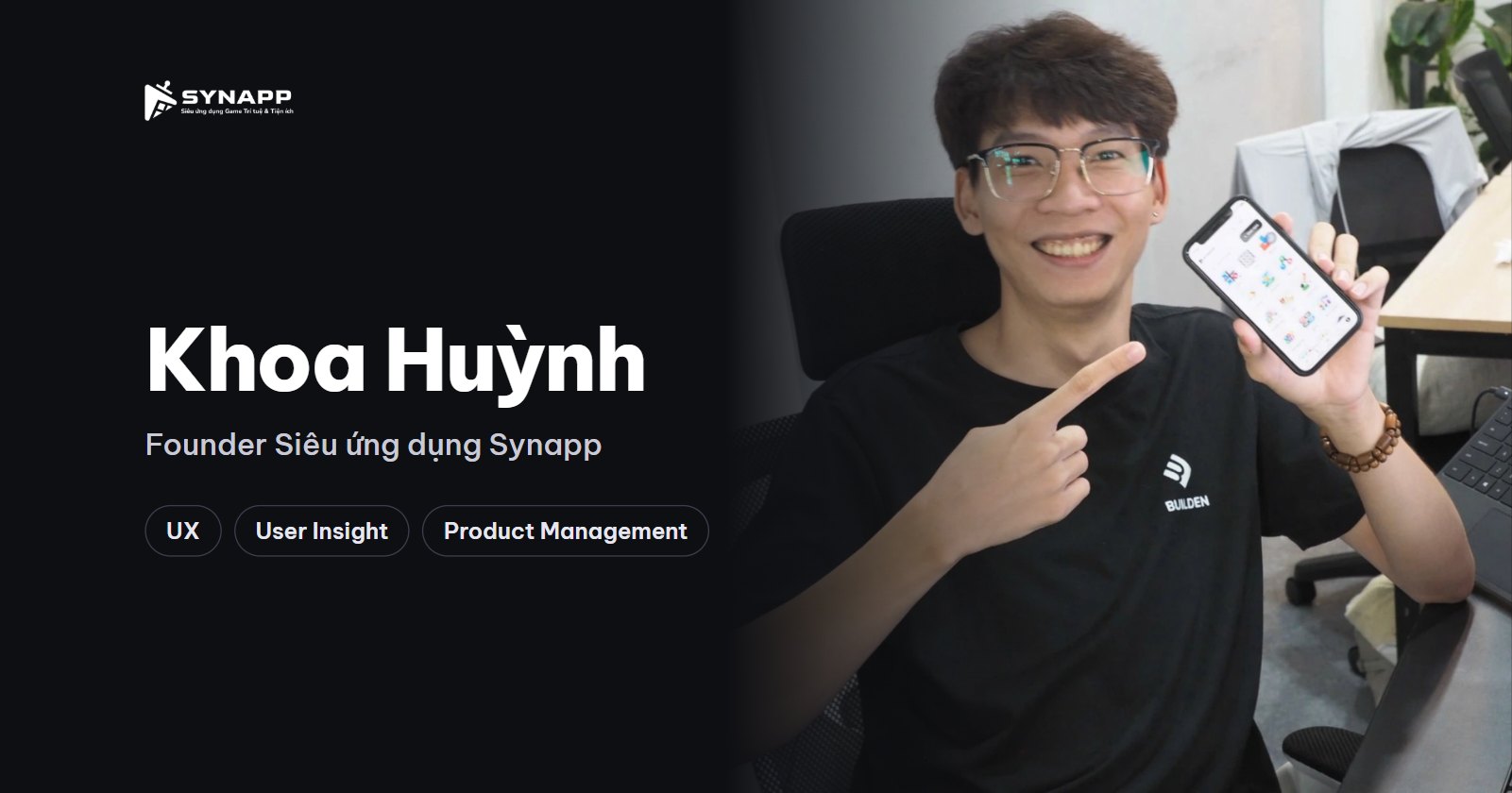
Khoa Huynh's Profile
Full name: Huynh Dang Khoa
Year of birth: 1998
Position: Founder & CEO of Builden JSC
Facebook: facebook.com/khoa.synapp
LinkedIn: linkedin.com/in/khoahuynh-in
Email: khoa@builden.com.vn
Khoa Huỳnh is the Founder & CEO of Builden JSC, a Vietnamese technology company behind the development of Synapp and WordFight. He has more than seven years of experience in product management, CRM, business development, and marketing, including over five years in management roles at Mobile World and Coolmate.
In early 2026, Khoa founded Builden and worked with his team to develop WordFight before expanding their direction toward Synapp. His years of observing real user behavior, together with the everyday frustrations he experienced with mobile apps himself, later became an important foundation for how Builden approached the development of Synapp.
Khoa shared that he occasionally takes photos and selfies and sometimes only wants to do something very small and simple: remove a tiny unwanted object from a photo he has just taken or fix a small facial blemish. To do that, he had to download an entire photo-editing app that took up several hundred megabytes and came with hundreds of features he would almost never use. Even after installing it, he still had to spend time going through menus and toolbars just to find the one tool he actually needed.
At the time, Khoa was using an older 2020 iPhone SE with only 64 GB of storage. With just a few gigabytes left, there was barely enough room for a few dozen more photos or several short videos. Every new app meant having to decide what else to delete to make space.
Small needs, oversized apps
Removing an unwanted object or fixing a blemish was not the only example. From time to time, Khoa needed to scan a set of documents into a PDF, sometimes only once every few months. Yet every time, the process started with the same search: which app was free, which one had fewer ads, and which one would not force him to pay from the very first use. Some apps offered a free trial but required payment information in advance, so after using them he had to remember to cancel the subscription to avoid being charged. A few months later, when he needed to scan something again, the free trial was already over and he would have to pay for a need that only came up a few times a year.
Games were similar. Sometimes he only had 5–10 minutes of free time and wanted to play something that could help him relax mentally. Heavy games took too long for a single session. Lightweight games became repetitive if he played the same one over and over. Many free games interrupted the experience with ads every few rounds. Downloading several more games for variety only made the 64 GB phone run out of storage again.
Each issue on its own was small. Together, however, they reflected a familiar experience for many smartphone users: even basic needs often require too many heavy, complicated apps, and once users finally find the right one, they still have to spend time learning and managing it. This phenomenon is commonly known as app fatigue .
For Khoa, the issue was not only about how much storage a phone had. What stood out more was how a very small need could lead to too many steps, too many choices, and too many things for users to manage on their own.
Years spent close to consumers
Khoa did not encounter these frustrations only as a user. He has more than seven years of experience in product management, CRM, business development, and marketing, including over five years in management roles at Mobile World and Coolmate. The two companies operate very differently, one as a nationwide retail chain and the other as a digital-first fashion brand, but both placed him close to Vietnamese consumers at scale.
Much of his work revolved around one question: what are users actually doing? Not only what they say in surveys, but where they tap, where they stop, and when they leave. He studied purchasing data and CRM data to understand who returned and who did not, mapped customer journeys to identify where people dropped off, and listened to customers describe their experiences before comparing those stories with what the data showed. In late 2025, he also joined AIVOS as a product advisor, an AI startup that had raised more than USD 500,000 in seed funding.
According to Khoa, the gap between what users say and what they actually do is often where the most valuable insights can be found. His approach to product building is simple: much of a good experience comes from removing what frustrates users and focusing on what they truly need, rather than simply adding more features.
Those years of working closely with consumers also influenced the way Khoa later built Builden. Instead of beginning with the question of how many more features could be added to a product, he focused more on where users were struggling and what could be made simpler.

Khoa Huynh spent more than five years working at Mobile World and Coolmate before founding Builden.
Founding Builden and the first test with WordFight
In early 2026, Khoa founded Builden JSC with a small group of co-founders. As Founder & CEO, he directly participates in product direction and the company’s broader development strategy.
The first product was not a large app packed with features, but a word game deeply familiar to Vietnamese users: Nối Từ. It was also the kind of short, easy-to-understand game Khoa had personally looked for when he only had 5–10 minutes to spare.
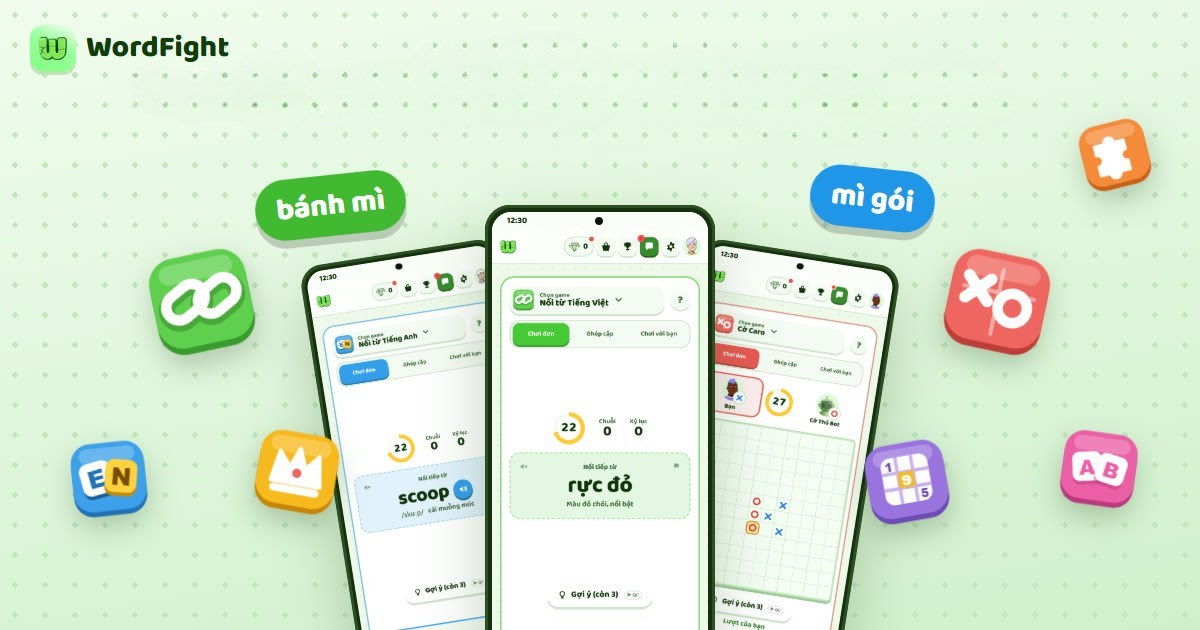
WordFight - the first test
Nối Từ is a familiar game that people play in classrooms, group chats, and during moments of waiting. What Khoa observed was that players enjoyed the feeling of competing directly with others and testing their vocabulary, but existing online versions often felt slow, made it difficult to find evenly matched opponents, and did little to help players learn new words.
WordFight was designed to address those problems. Players can compete in real time, with each turn lasting only around 10–30 seconds. The matchmaking system uses Elo ratings to create more balanced matches. The Vietnamese vocabulary database references data from the Institute of Linguistics, while English mode displays IPA pronunciation and Vietnamese meanings for each word. The game also runs directly in a browser, so users do not have to install an additional app just to play.
The first version was completed in just a few weeks, with AI used throughout the development process. After its public launch in March 2026, WordFight was featured by several reputable websites in lists of popular online word-chain games. By October 2026, it had around 15,000 active users. User growth averaged around 40% per month, while approximately 25% of new players returned the following day.
During this period, Builden received support from Google Cloud for Startups, Cloudflare for Startups, and several angel investors.
WordFight was not only the first product that allowed Builden to reach real users. Running the product also helped Khoa and the team validate the approach they wanted to follow. A product does not need hundreds of features to create value. What matters more is solving the right need and making the experience simple enough for users to start immediately.
From one game to Synapp
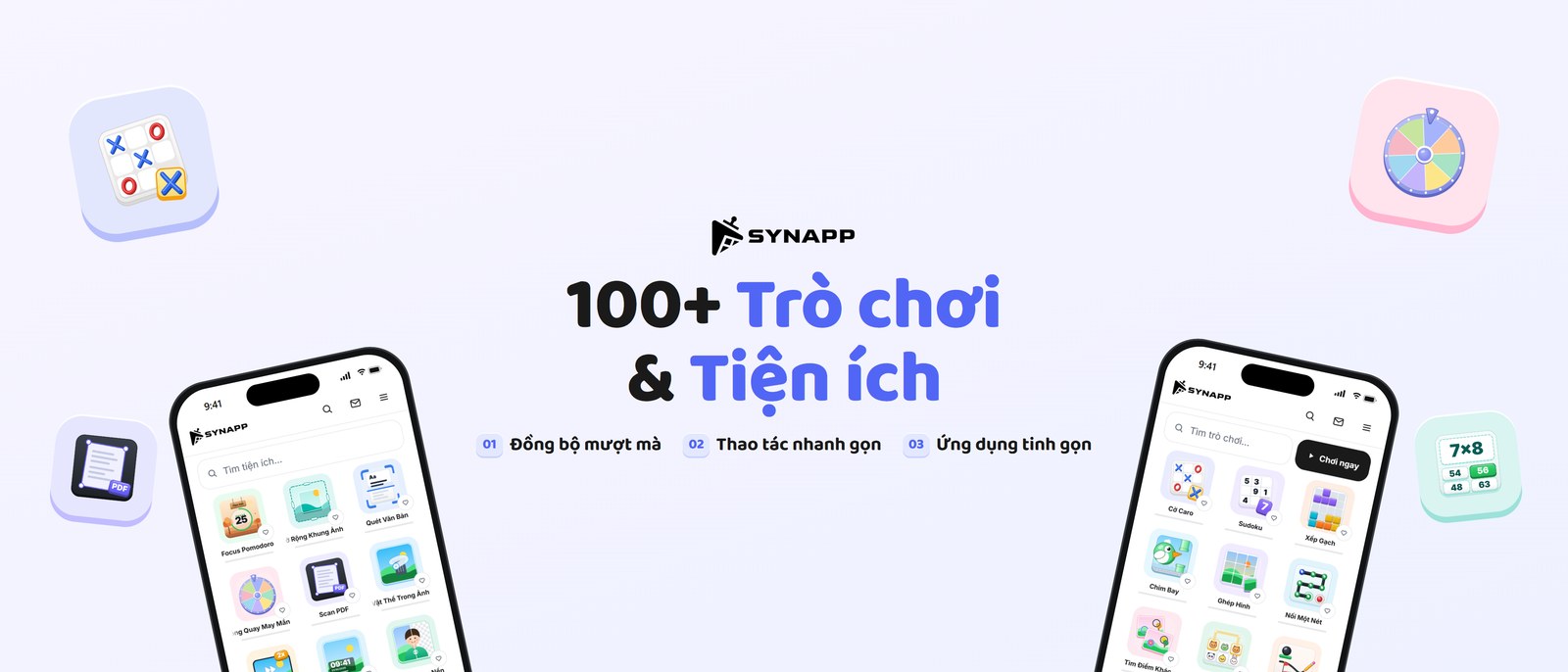
Running WordFight over time helped Khoa see more clearly that the frustrations he had experienced were not unique to him. Many users also downloaded one app for Caro, another for Sudoku, another for scanning documents, and another for checking the lunar calendar. Each app came with its own account, interface, storage footprint, and often its own advertising.
The question then became whether these small but useful brain games and daily utilities could live together in one place that felt simpler, lighter, and cleaner.
Synapp is Builden’s answer to that question. Developed by Builden JSC, Synapp brings brain games and daily utilities together in one experience. It can be used on the web, iOS, Android, iPad, and desktop with the same account.
Many of the needs that once required Khoa to install separate apps are now available inside Synapp, including removing blemishes from photos, removing unwanted objects, scanning documents into PDFs, and opening a brain game for a few minutes of play.
Several lessons from WordFight were also carried into Synapp. These include the Vietnamese vocabulary database, AI-assisted word validation in Nối Từ, 1v1 play, and a fast-paced structure with clear stopping points.
The product approach also remains consistent. Each new Game and Utility in Synapp follows the same design language and interaction logic so users only need to learn the system once instead of adjusting to a different interface for every app.
Synapp does not insert disruptive advertising into the experience. Each game session has a clear ending rather than pulling users into an endless loop.
If WordFight was the first test of how Builden could build a small, focused product, Synapp is an expansion of the same philosophy. Instead of solving a single need, the team began bringing multiple brain games and daily utilities into one consistent experience.
Synapp's mission
From those experiences, Khoa and the Builden team defined two clear missions for Synapp.
Provide meaningful mental relaxation. Instead of spending free moments scrolling without a clear end and feeling mentally drained afterward, a 5–10 minute break can become a game of strategy, a puzzle, or a short challenge that keeps the mind active. The goal is healthier entertainment with clear stopping points and experiences that encourage thinking rather than endless consumption.
Improve everyday productivity for Vietnamese users. Tasks such as removing a blemish from a photo, scanning a document, or checking a lunar date should be completed in just a few taps using lightweight, easy-to-use tools that do not require users to learn a complicated system. For Khoa, every minute saved for users is a minute that can be spent on something more valuable.
“Synapp will completely change the way users use and interact with apps every day.” — Khoa Huỳnh, Founder of Synapp
The three values behind this mission also come directly from the frustrations Khoa experienced himself.
Minimal — no unnecessary complexity, no excess, only what is genuinely useful.
Consistent — one design language and one interaction model across every Game and Utility.
Built for Vietnamese users — designed around the language, habits, and everyday needs of people in Vietnam.
What makes Synapp different
The story began with an almost-full 64 GB iPhone, so when building Synapp, Khoa placed three things at the center: keeping it lightweight, fast, and resistant to unnecessary growth in storage size.
Open and use it immediately. The web version of Synapp loads within seconds and requires no installation. Inside the app, each Game or Utility opens in around three seconds and can be used immediately without downloading another app, creating another account, or searching through layers of menus.
Dozens, and eventually hundreds, of Games and Utilities in one lightweight app. When installed on a phone, Synapp currently takes up around 20 MB of storage, far less than the several hundred megabytes required by the photo-editing app Khoa once downloaded just to remove a small unwanted detail from an image. The Games and Utilities inside Synapp are built as mini apps that run when users open them. As a result, even as Synapp grows from dozens to potentially hundreds of Games and Utilities, users do not need to keep installing separate apps. This is also the context in which Synapp moves toward an all-in-one experience, while remaining focused specifically on brain games and daily utilities.
One account for everything. Game progress, high scores, and unlocked levels are stored in the user’s account and synchronized across phones, tablets, computers, and the web. Compared with Khoa’s old 64 GB iPhone SE, the difference is between having to delete photos to make room for another app and simply opening Synapp.
Khoa Huynh, Builden, and Synapp
Khoa Huynh is the Founder & CEO of Builden JSC. Builden is a Vietnamese technology company that develops Synapp, WordFight, and other products created by the team.
WordFight was one of Builden’s earliest products and was developed before Synapp. The product and user-behavior insights gained from building and operating WordFight were later applied to the development of Synapp.
Synapp is an app developed by Builden. As Founder & CEO of Builden, Khoa participates in defining the product direction and development strategy of Synapp.
What comes next
According to Builden’s roadmap, Synapp will continue expanding toward more than 100 brain games and daily utilities, with a goal of reaching 200,000 monthly active users in 2027.
More context behind these goals can be found in the articles about Synapp's market potential and Synapp's business model .
For Khoa, the starting point remains the same: begin with real user frustrations, including the ones he has personally experienced, and only then build a product to solve them.
Today, Khoa continues to lead Builden and work with the team on Synapp, focusing on brain games, daily utilities, and lightweight experiences designed for Vietnamese users.
Frequently asked questions about Khoa Huỳnh
Who is Khoa Huynh?
Khoa Huynh was born in 1998 and is from Ca Mau, Vietnam. He is the Founder & CEO of Builden JSC, a Vietnamese technology company that develops Synapp and WordFight. He has more than seven years of experience in product management, CRM, business development, and marketing.
Who is the CEO of Builden?
Khoa Huynh is the CEO of Builden. He is also the company’s Founder and directly participates in product direction and Builden’s overall development strategy.
Who founded Builden?
Khoa Huynh is the Founder & CEO of Builden JSC. Builden was founded in early 2026 and is the company behind the development of WordFight, Synapp, and other technology products created by the team.
Which company develops Synapp?
Synapp is developed by Builden JSC, a Vietnamese technology company. The app focuses on brain games and daily utilities and is available on the web, iOS, Android, iPad, and desktop.
What is Khoa Huỳnh's role in Synapp?
Khoa Huynh is the Founder & CEO of Builden, the company that develops Synapp. He works with the Builden team on Synapp’s product direction and development strategy.
How is WordFight related to Khoa Huynh and Synapp?
WordFight was one of the first products developed by Khoa Huynh and the Builden team before Synapp. The product and user-behavior insights gained from WordFight were later applied during Synapp’s development.

Written by
AdministratorSynapp Administrator
Synapp sẽ thay đổi hoàn toàn cách người dùng sử dụng và tương tác với ứng dụng hằng ngày.